

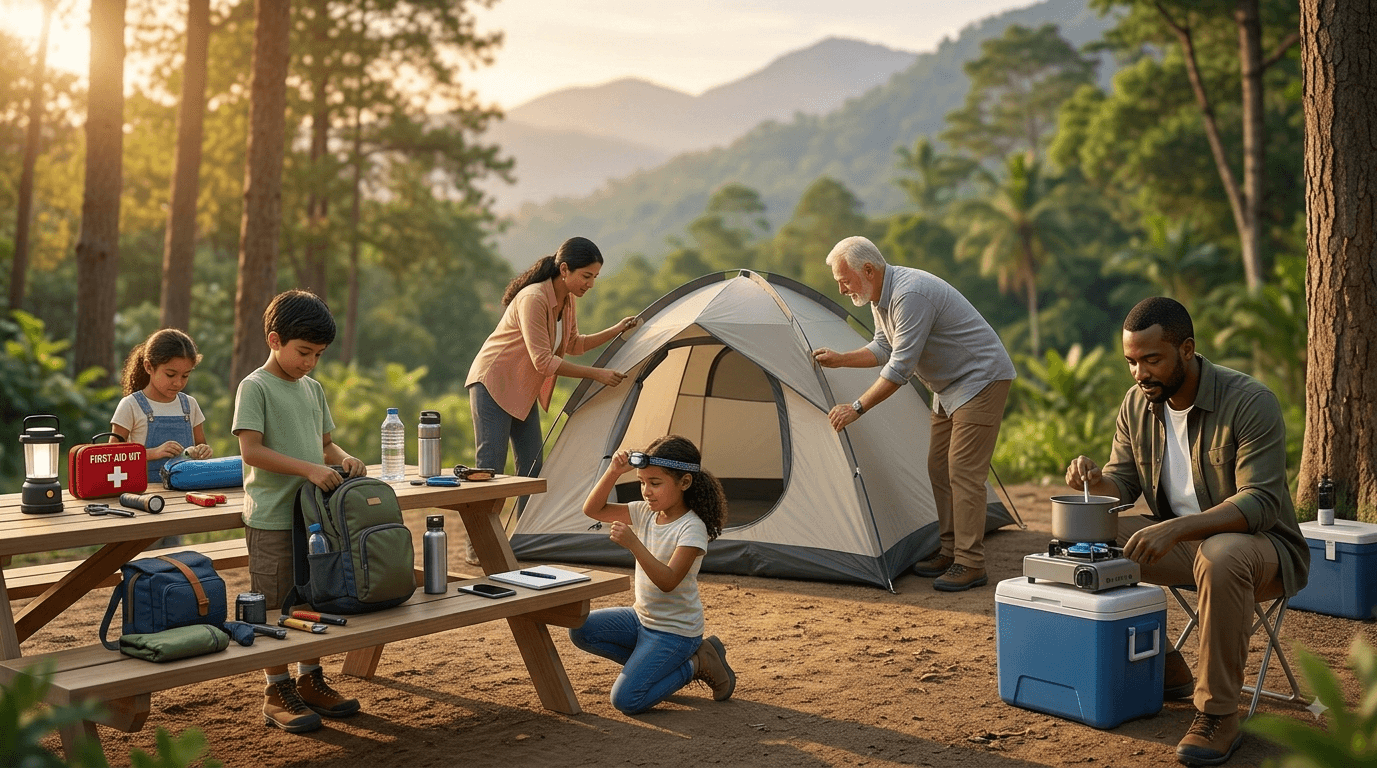
A practical camping safety guide covering weather, fire, food, water, wildlife, navigation, and emergency preparedness for outdoor trips.
The Best Campsite Decision Happens Before You Arrive
Most camping mishaps trace back to one of a handful of decisions made in the first hour — where the tent goes, how food gets stored, whether anyone actually checked the weather for the next 48 hours. Get those right, and the rest of the trip tends to take care of itself.
Choosing and Setting Up Your Site
- Check whether the site is designated or permitted for camping — undesignated sites often lack safety oversight and may carry access or legal issues.
- Avoid pitching a tent under dead trees or branches, near dry creek beds prone to flash flooding, or on low ground where water can pool.
- Set up before dark where possible — assessing ground, hazards, and site layout is much harder once light fades.
- Keep a clear path to your vehicle or the site exit, especially if you may need to leave quickly at night.
Campfire Safety
- Only build fires in designated fire rings or pits where permitted, and check current fire restrictions before you go — conditions change by season and location.
- Keep the fire small and manageable, and never leave it unattended, even briefly.
- Keep water or sand nearby specifically for extinguishing the fire.
- Fully extinguish the fire before sleeping or leaving — drown, stir, and drown again until it's cool to the touch.
- Keep flammable items, including tents, at a safe distance from any open flame.
Food Storage and Wildlife
- Store food, trash, and scented items securely, away from your sleeping area — in a vehicle, a designated storage container, or hung appropriately where required.
- Never keep food inside your tent, even snacks — it's one of the most common causes of unwanted wildlife encounters.
- Clean up cooking areas thoroughly after every meal, and dispose of waste properly rather than burying or burning it.
- Research wildlife specific to your camping area in advance, including any recommended food storage requirements.
Weather Preparedness
- Check the extended forecast, not just the day of arrival — conditions can shift significantly over a multi-day trip.
- Pack for temperature swings, particularly overnight, when temperatures often drop more than expected.
- Know your site's exposure to wind, storms, and flooding risk, and have a plan for moving to shelter if conditions turn severe.
- Secure loose gear and tent guy lines before any expected wind or storm.
Group Safety and Headcounts
- Establish a check-in routine for anyone leaving camp, even briefly, including where they're going and when they'll be back.
- Do headcounts at mealtimes and before settling in for the night.
- Keep children within sight of camp, particularly near water, cliffs, or fire.
- Agree on a meeting point in case anyone becomes separated from the group.
Nighttime Safety Around Camp
- Keep a headlamp or torch within reach at all times after dark.
- Know the layout of your camp in the dark — the route to the toilet area, water source, and exit, without relying on memory of daylight conditions.
- Store food and scented items away from sleeping areas overnight, following the same precautions as during the day.
- Keep a whistle accessible as a simple way to signal for help if needed.
Leaving No Trace
- Pack out everything you bring in, including all trash and food waste.
- Leave natural features, plants, and wildlife undisturbed.
- Respect quiet hours and other campers' space, particularly in shared or busy campgrounds.
Quick Reference
- Choose wisely: designated site, away from hazards, set up before dark
- Fire: designated rings only, never unattended, fully extinguished before sleep
- Food: stored securely, never in tents, cleaned up promptly
- Weather: check the extended forecast, pack for overnight drops
- Group: check-ins, headcounts, an agreed meeting point
- At night: headlamp within reach, know your camp layout in the dark
This article provides general camping-safety education and does not replace local park regulations, fire restrictions, or site-specific guidance. Always check current advisories for your specific camping location.