

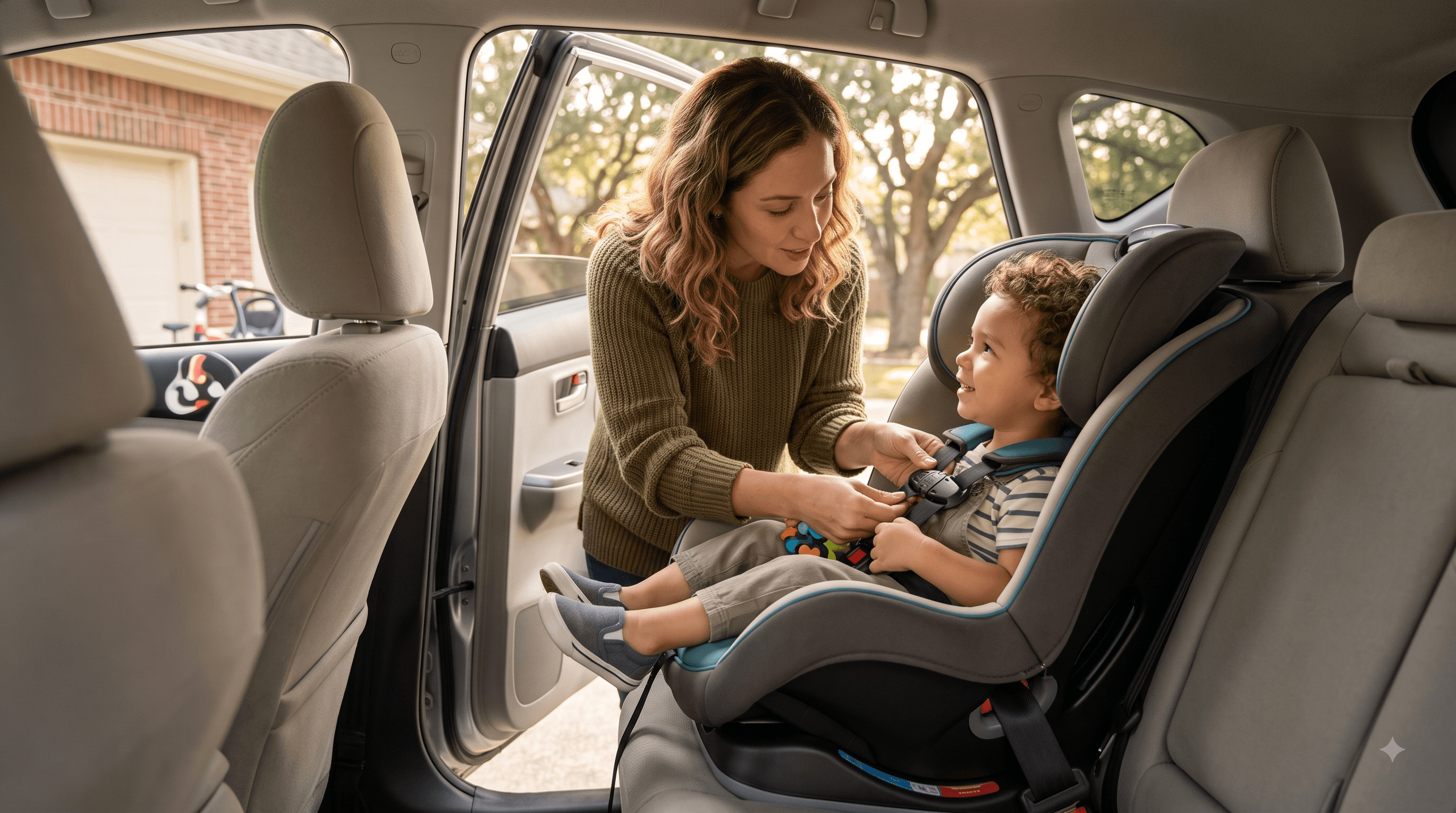
Practical car safety guidance covering seat belts, child restraints, speed, distractions, vehicle checks, safe following distance, and driving in difficult conditions.
The Habits That Matter Happen Before You Even Move
Most car safety isn't about reacting well in a crisis — it's about a handful of habits repeated so consistently they become automatic: the seatbelt click, the mirror check, the following distance you don't even think about anymore.
Seatbelts and Child Safety
- Everyone in the vehicle wears a seatbelt, every trip, regardless of distance — most serious injuries from short, "just around the corner" trips happen precisely because this habit slipped.
- Use an appropriate child car seat or booster matched to your child's age, weight, and height, installed according to the manufacturer's instructions.
- Never hold a child on your lap while driving or as a passenger — in a collision, even at low speed, the forces involved make this genuinely dangerous.
- Check car seat installation periodically — straps loosen and buckles can be affected by regular use.
Distracted Driving
- Put your phone out of reach while driving, not just on silent — visibility of a notification is often enough to create distraction.
- Set navigation and music before you start moving, not while driving.
- Avoid eating, applying makeup, or other secondary tasks while driving — anything that takes your eyes or attention off the road for more than a second or two adds real risk.
- Pull over safely if you need to attend to something urgent, rather than trying to manage it while moving.
Following Distance and Speed
- Keep a following distance that gives you time to react, increasing it further in rain, fog, or heavy traffic.
- Adjust your speed to conditions, not just the posted limit — the safe speed for wet roads, poor visibility, or heavy traffic is often lower than the maximum allowed.
- Anticipate the vehicle ahead's actions, watching brake lights and indicators early rather than reacting only when it slows.
Defensive Driving
- Assume other drivers may make mistakes, and position yourself and your speed to have room to react.
- Check mirrors and blind spots before every lane change, not just a glance at the mirror.
- Be especially cautious at intersections, where a large share of collisions occur, even when you have the right of way.
- Give cyclists and pedestrians extra space and attention, particularly in urban areas and near schools.
Vehicle Maintenance Basics
- Check tyre pressure and tread regularly — both affect stopping distance and handling significantly.
- Test brakes periodically for responsiveness, and address any unusual sounds or feel promptly.
- Keep lights, indicators, and wipers in working order, checking them as part of a routine habit rather than only when something fails.
- Don't ignore dashboard warning lights — investigate them promptly rather than assuming they'll resolve on their own.
Weather and Road Conditions
- Reduce speed significantly in rain, fog, or low visibility, and increase following distance.
- Use headlights in poor visibility conditions, even during the day, to help other drivers see you.
- Avoid sudden braking or steering on wet or slippery surfaces, which reduces tyre grip and control.
- If visibility becomes very poor, consider pulling over safely rather than continuing to drive with reduced awareness of hazards.
Fatigue and Long Drives
- Recognize the signs of driver fatigue — heavy eyelids, drifting within your lane, difficulty remembering the last few minutes of driving.
- Take a break every couple of hours on long drives, or sooner if you notice fatigue.
- Share driving on very long trips where possible, and avoid driving through your usual sleep hours if you can.
- Treat fatigue as seriously as any other driving hazard — it affects reaction time and judgment significantly.
If You Break Down or Have an Incident
- Move to a safe location off the road where possible, and use hazard lights to alert other drivers.
- Stay inside the vehicle if it's not safe to exit, particularly on a high-speed road, until help arrives or it's clearly safe to move.
- Contact roadside assistance or your local emergency service as appropriate for the situation.
- Exchange information calmly after any collision, and contact your insurer and local authorities as required.
Quick Reference
- Every trip: seatbelts on, phone out of reach, child seats checked
- On the road: keep following distance, adjust speed to conditions, check blind spots
- Maintenance: tyres, brakes, lights checked regularly — don't ignore warning lights
- Fatigue: take breaks on long drives, recognize the early signs
- If something goes wrong: move to safety, use hazard lights, stay calm
This article provides general driving-safety education and does not replace local traffic laws or your vehicle manufacturer's specific guidance. Always follow local road rules and regulations for your area.