

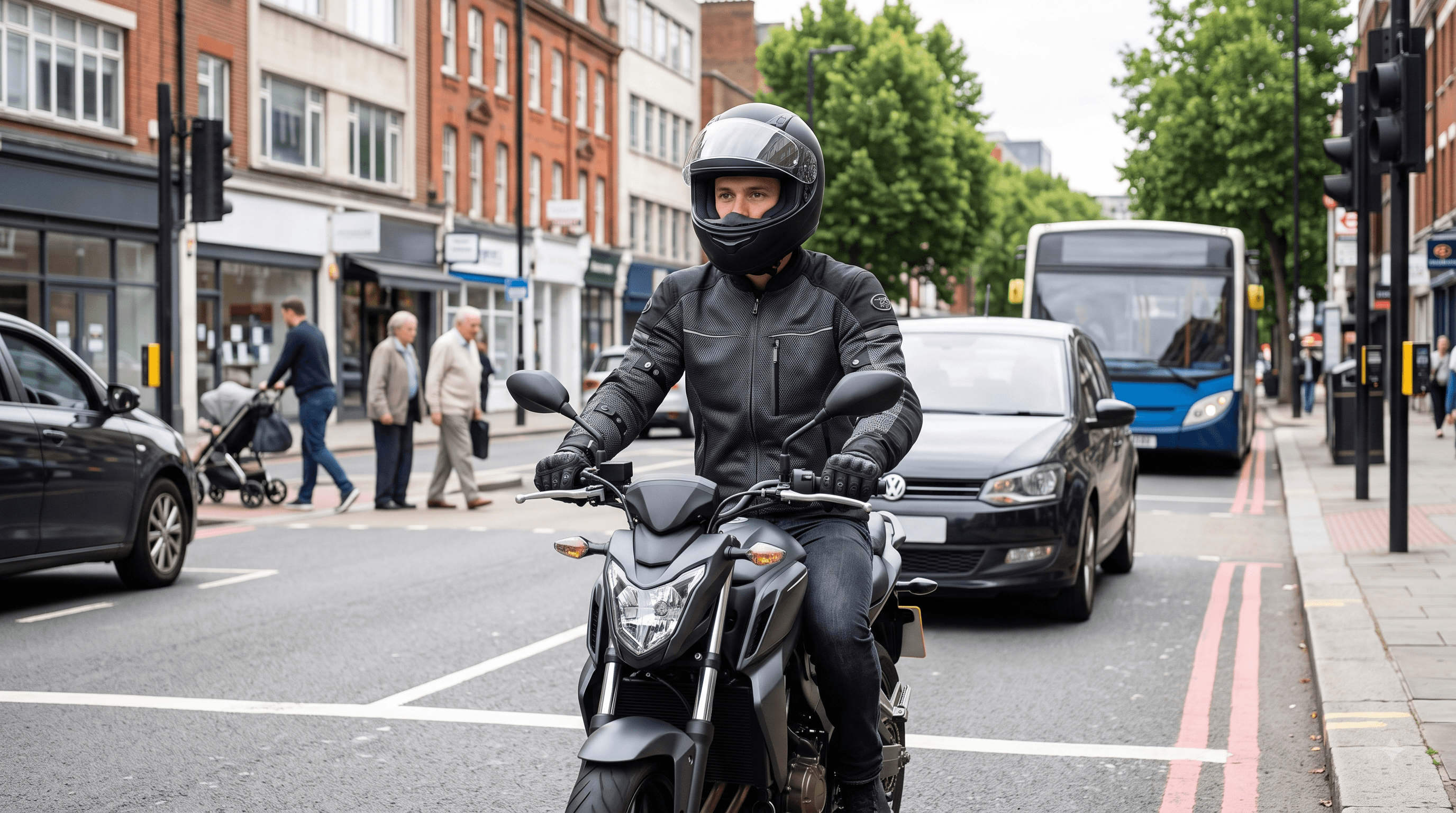
Practical two-wheeler safety guidance covering helmets, speed, visibility, defensive riding, road conditions, passengers, and basic motorcycle preparedness.
Most Two-Wheeler Risk Isn't on the Open Road
It's in traffic. Between lanes. At a signal. In a gap that looked wide enough. This article focuses on the everyday, low-speed riding situations that don't always feel dangerous but account for a large share of real incidents. For gear selection, defensive riding fundamentals, and pre-ride checks, see our full Two-Wheeler Safety Guide — this article builds on that with practical habits for daily traffic riding.
Filtering and Lane Positioning
- Only filter through traffic at a speed where you can stop instantly — a gap that looks passable at speed often isn't.
- Assume a vehicle may change lanes without checking a mirror or blind spot — you're often exactly where a driver isn't expecting anyone.
- Position yourself where you're visible in mirrors, not tucked directly behind a vehicle where you disappear from view.
- Cover your brakes when filtering or approaching stopped traffic, so your reaction time is as short as possible.
Potholes, Road Hazards, and Surface Changes
- Scan the road surface well ahead, not just immediately in front of your wheel — hazards need time to react to, not just notice.
- If a pothole or hazard is unavoidable, slow down and pass over it as upright and straight as possible, rather than swerving sharply at the last second.
- Be especially cautious of manhole covers, painted lines, and metal surfaces, which are more slippery than the surrounding road, particularly when wet.
- Watch for loose gravel, sand, or debris at junctions, construction zones, and roadsides.
Traffic Signals, Junctions, and Roundabouts
- Cover your brakes approaching any signal or junction, even a green light — signals change, and other vehicles don't always stop in time.
- At roundabouts, hold a clear lane position and avoid riding in a car's blind spot while circulating.
- Be cautious of vehicles turning across your path at junctions — this is one of the most common collision patterns for two-wheelers, even when you have right of way.
- Make yourself visually obvious at every junction — position, not just headlight use, affects how easily drivers spot you.
Being Followed Too Closely
- If a vehicle is tailgating you, increase your own following distance rather than braking suddenly — this gives you more room to react without being rear-ended.
- Change lane position slightly to become more visible in the tailgating driver's mirrors, if safely possible.
- Avoid sudden braking where you can help it, and signal your intentions clearly and early.
Parking and Anti-Theft Habits
- Park in well-lit, visible areas where possible, particularly overnight.
- Use a steering or disc lock in addition to the ignition lock, as a visible deterrent.
- Avoid leaving helmets or valuables attached to the vehicle when parked and unattended.
- Vary your parking location occasionally if you park in the same public spot regularly.
A Quick Daily Habit
Beyond the full pre-ride check covered in our Two-Wheeler Safety Guide, a 10-second daily glance is worth building into habit every time you get on:
- Tyres look properly inflated, no visible damage
- Mirrors are positioned correctly
- Lights and indicators work
- Nothing feels loose when you sit on the vehicle
Quick Reference
- Filtering: only at a speed you can stop from, stay visible in mirrors
- Hazards: scan well ahead, cross straight and upright, watch wet metal surfaces
- Junctions: cover your brakes, assume you haven't been seen, hold clear lane position
- Tailgated: increase distance rather than braking hard, signal early
- Parking: well-lit areas, an extra lock, valuables not left attached
- Daily habit: a 10-second check every time you ride, not just occasionally
This article provides general everyday-riding awareness and complements our full Two-Wheeler Safety Guide, which covers gear, defensive riding fundamentals, and pre-ride checks in depth. Always follow local traffic laws and road conditions specific to your area.